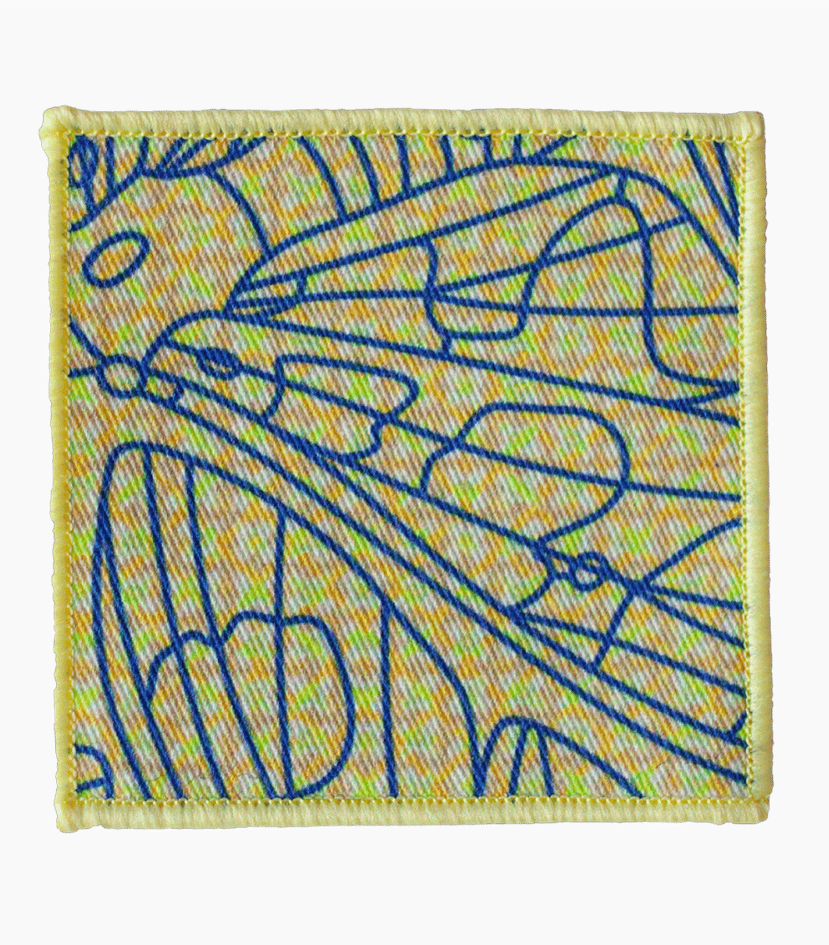
rebel patch
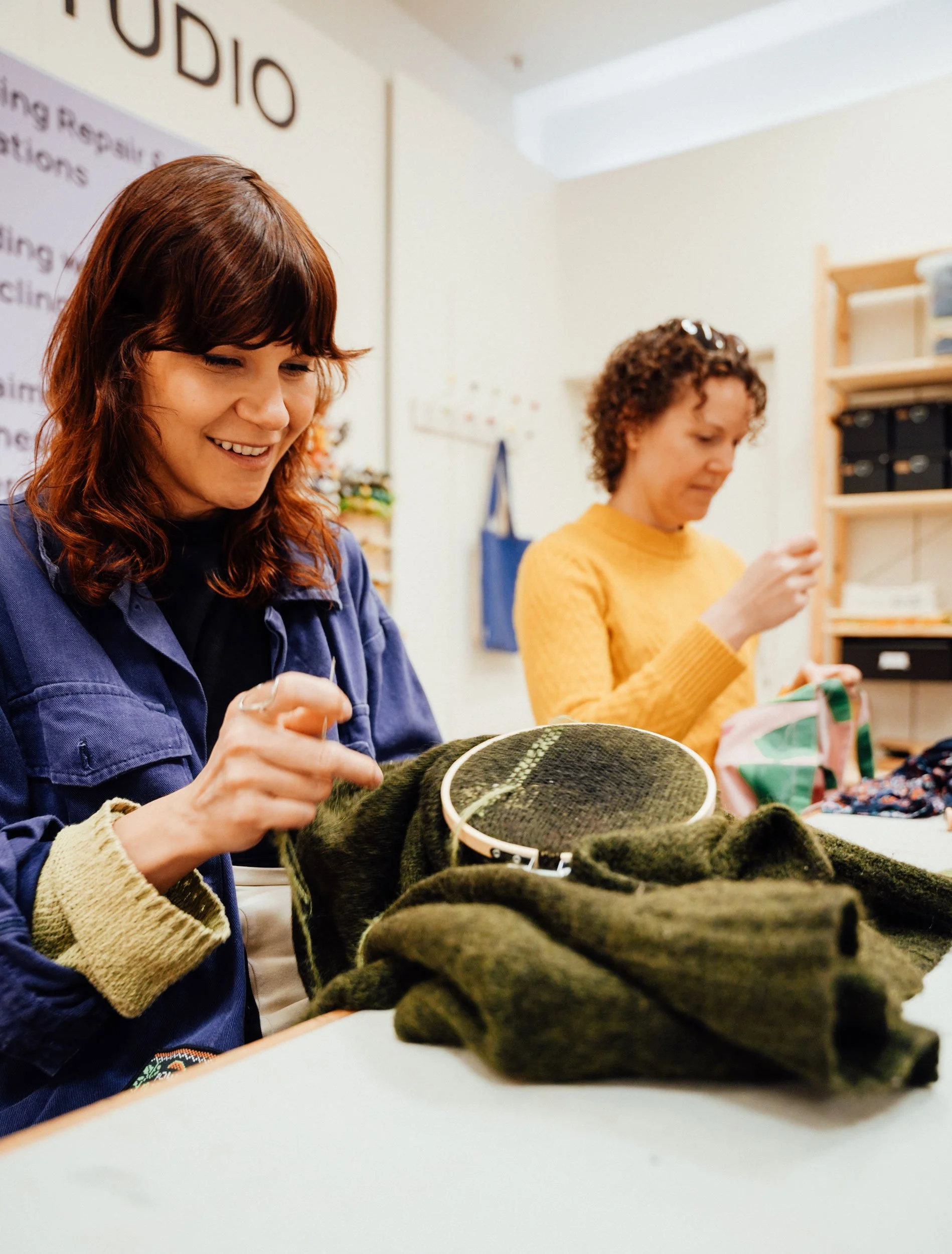
created by lisa matzi - the story
RARELY WORN, STAINED OR DAMAGED CLOTHING DESERVES A SECONG LEASE OF LIFE.
Beginning of 2022, feeling frustrated with my day job, sitting in front of a screen for 8 hours a day, I started to learn visible mending.
I loved it so much I mended everything I had and even started asking friends if they had anything to mend for me. I got obsessed with darning and patching up holes and the satisfaction and new found love for the repaired pieces it gave me.
I wanted more people to be able to experience the art of repair in an accessible, fun and creative way. But repair tools and techniques are very limited in terms of what they look like and can do.
I loved the idea of iron on patches and how easy to use they were, but I didn’t like the design, materials or the fact that they were produced under questionable conditions. So I set out to reinvent the iron patch and combine it with my love for art. This is a very abbreviated version of the full story, but that’s how Rebel Patch was born.
Lisa x

in conversation with founder lisa matzi
-
One of my first experiences of repair that I remember wasn’t as a kid when my grandma repaired my granddad’s old knit jumpers, even though she did that meticulously every year. But never in front of us. She only revealed that to me once I had started my own journey with repair. It made me wonder why she kept this hidden like a secret, something to be ashamed, not proud of. No, my very first contact with repair was on a backpacking trip through Colombia with a friend. I was a student with very little money but so much excitement for discovering a new country and practising my Spanish. On a very hot day in Cartagena wandering the streets in search of a supermarket we walked past a queue of around twenty people snaking around a corner reaching all the way to the end of the street. We couldn’t make out what they were queuing for at first, but we followed the line all the way to the end and saw an old man sitting on a white plastic chair on the pavement, a cart full of tools next to him. He held a kettle and a screwdriver in his hand. The woman next to him carried a toaster, another person a phone, the man behind him a fan. And slowly we realised that these people were lining up to get their items repaired by the old man. The queue was lively, people were chatting. I don’t remember what I was thinking but I took a photo of it. I had never seen anything like it before. That was in 2017. Nearly 10 years ago now and reflecting on it, I do think this was the first moment where I truly noticed the power of repair, especially when done in community.
I didn’t just start repairing everything after I saw the old man in the streets of Cartagena but the image stayed with me and got filed somewhere in the back of my brain. -
I had challenged myself in 2017 to only buy second hand for a year. In 2023 I challenged myself to not buy any clothes at all. I loved the challenge and noticed how it had made me a lot more creative with the things I already had. I felt more connected and I had time so I started to learn how to repair. The two holes in my grey sweater sleeve were the first two holes I ever darned. I used yellow, ice blue and purple embroidery thread. I was so thrilled with it, I wanted everyone to know. It was a seemingly small act but it felt huge.
-
I read books like “Loved Clothes Last” by Orsola de Castro and “Consumed” by Aja Barber. I had many conversations about how we have ended up in the age of climate breakdown, post capitalist horrors and disconnected lives. Repair as an antidote to all of it started to make even more sense. Living in a small town away from the buzzing city of London, that I had called home for 7 years, I had time to think about how I actually wanted to exist in this world. Did I want to contribute to harm and exploitation or did I want to, at least try, and find ways to reduce the harm I am causing and give something positive back?
-
Two pairs of socks, a knit jumper, some jeans and a jacket sleeve later I taught my first ever darning workshop. It was a group of mostly local friends but I felt I had discovered a secret I couldn’t keep to myself. Everyone had to learn how to darn! I loved seeing people work out how to fix something they loved but no longer wore. I felt honoured to be able to witness how they grew from not knowing how to thread a needle to having repaired their first piece of clothing ever. I loved seeing people get creative with colour, texture, placement and technique, putting their own spin on the newly learned skill. It was so fulfilling and exciting. Afterwards I thought about the people who attended but struggled. They liked the workshop but said they probably wouldn’t do it again because they simply didn’t feel like they could. I still wanted to make sure they could get creative with their clothes and I wondered what kind of solutions are already available to repair and add colour to your clothes without having to learn and practise an entirely new skill and quickly came across iron on patches. I found the classic smiley faces, peace signs and rainbows and while they have their place (no shade!) I did think that there is so much incredible art out there, especially art by artists like my friends who do wonderful work but are having a hard time getting their work seen. And this is where the idea for Rebel Patch was born. I wanted to create a new type of iron on/sew on patch that shows art from independent artists. I wanted to encourage people to spend time with their clothes by repairing and personalising them and turning them into a wearable gallery. And so I set out on a mission to create a sustainable alternative to the classic iron patch that highlights the work of independent artists and gives people a tool to change their clothes in a meaningful way.
How we make our patches step by step:
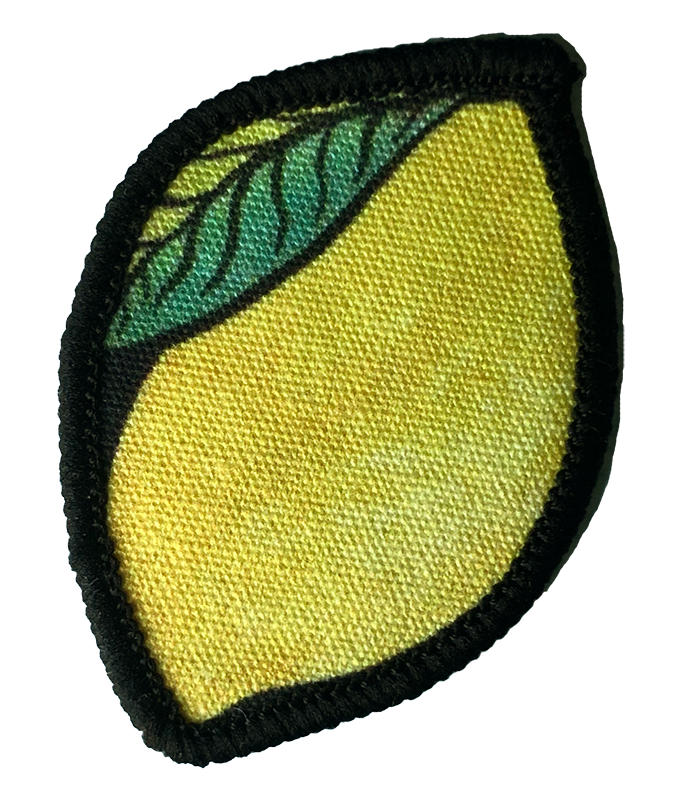
At the start of every collection is a long conversation with the artist we are featuring through the new collection to see if we align on values and what the focus of the collection could be. I really value collaboration and want the artist to bring as much of their own practice and style into the collection as possible.
1. Collaborate with a local artist
2. Refine and get artwork ready to print
After a few rounds of iterations and conversations we narrow down our favourite patch designs and experiment with patch sizes. We print them out on paper and cut them out to see what they would look like on different types of clothes and accessories. Once we’re happy with the sizes we get them ready to be printed on fabric.
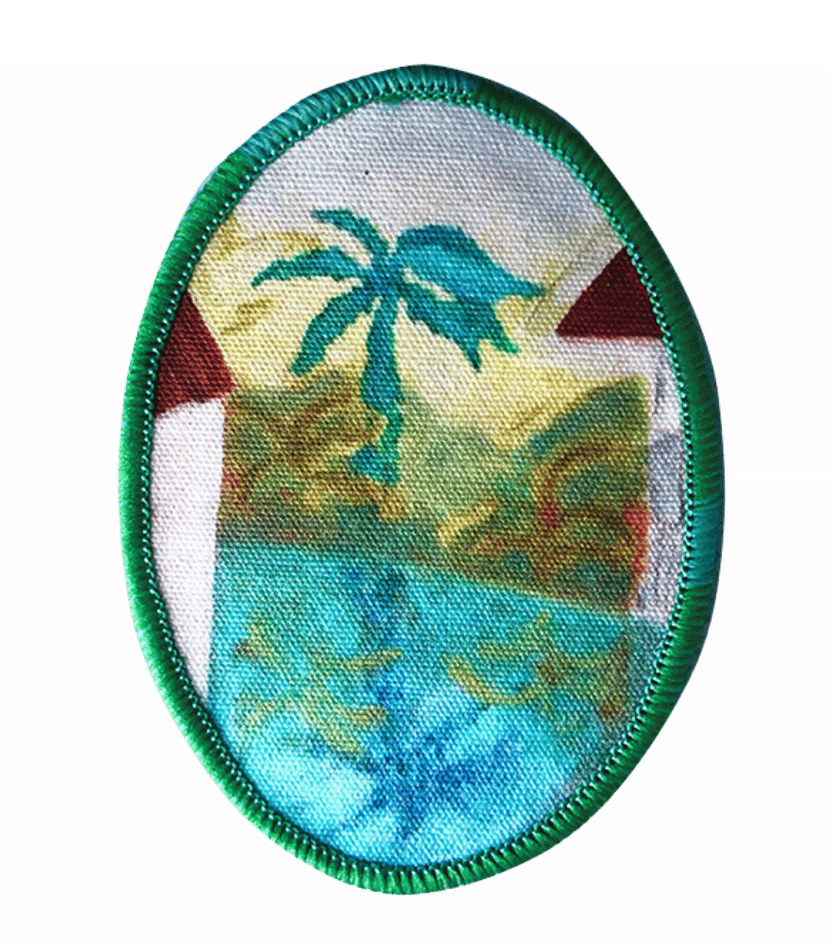
The printing takes place in a sustainable printing facility that uses a closed loop system which minimises the use of water and creates way less waste than traditional digital printing on fabrics. We always prioritise organic cotton over regular cotton where possible.
Interesting fact: we print the patches as a repeat pattern which is why you can never order just one bespoke patch. You have to get at least 4.
3. the printing production
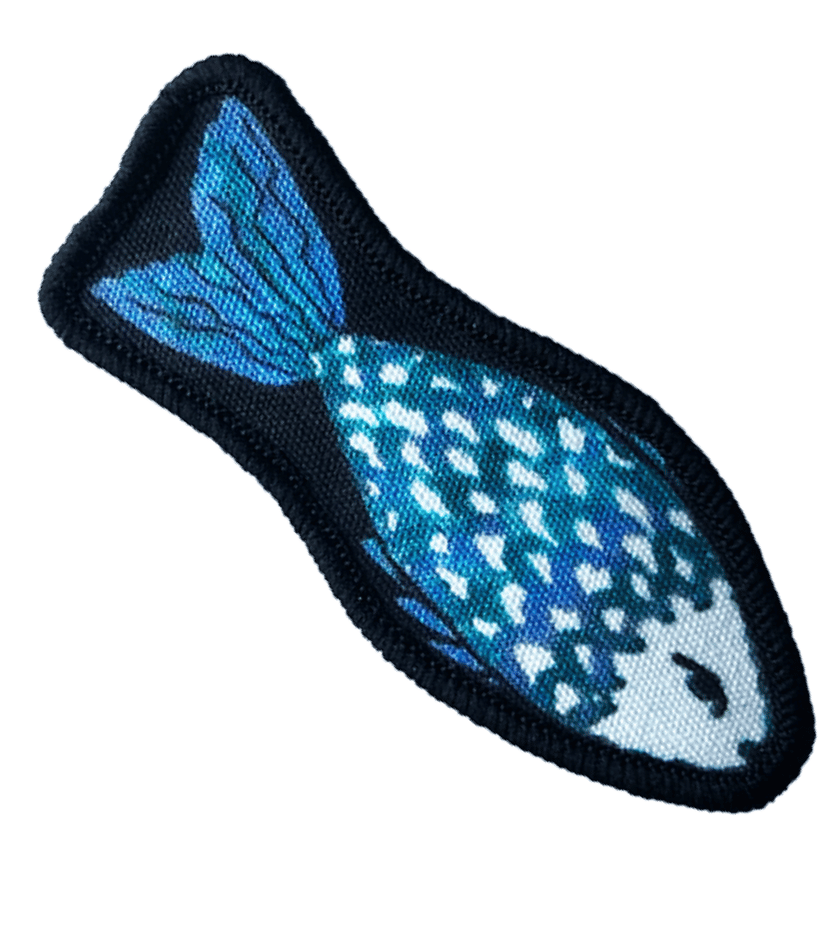
Ready to get your own patches?
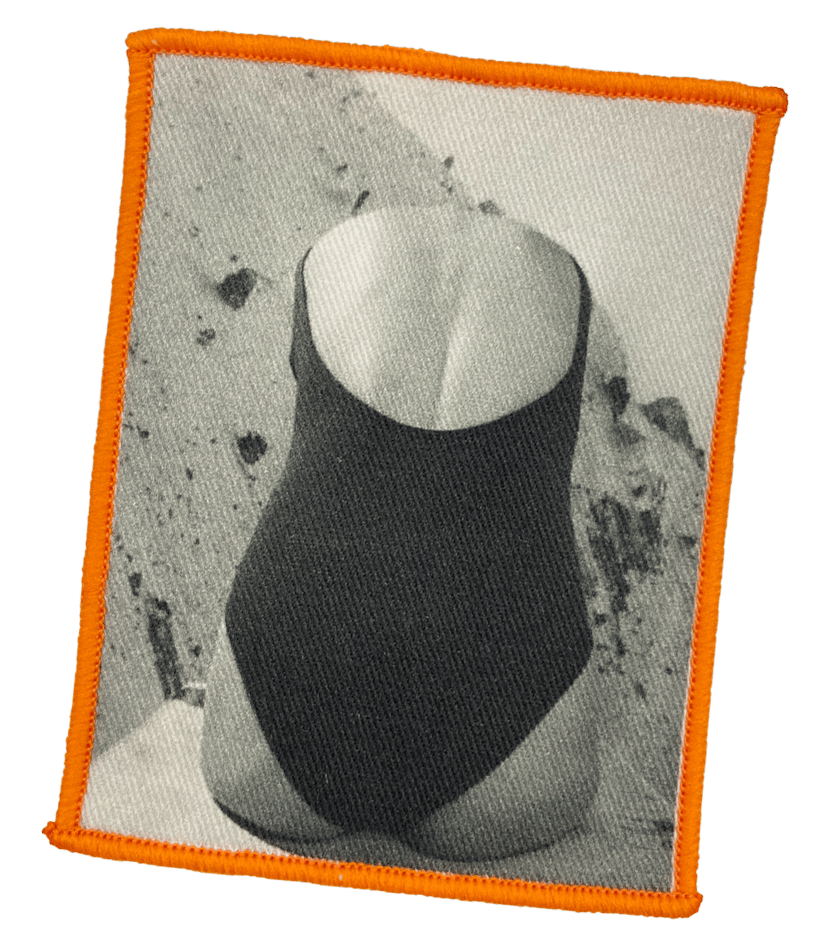
I check all of the patches over myself, before I send them out or bring them to one of my stockists, that way I can ensure everything remains as consistent as possible.
5. our patch production
Once the fabric with all of the patches printed on has shipped to me, I cycle them over to my manufacturer, which I am very lucky, is only a 15 minute bike ride from my house. I have an amazing team of seamstresses who always get so excited when there is a new collection they can work on! We usually choose the colours for the overlock thread together. Then they cut all of the patches, add the interfacing, overlock the edges and add the iron on backing where needed. This process usually takes 2-3 weeks.